
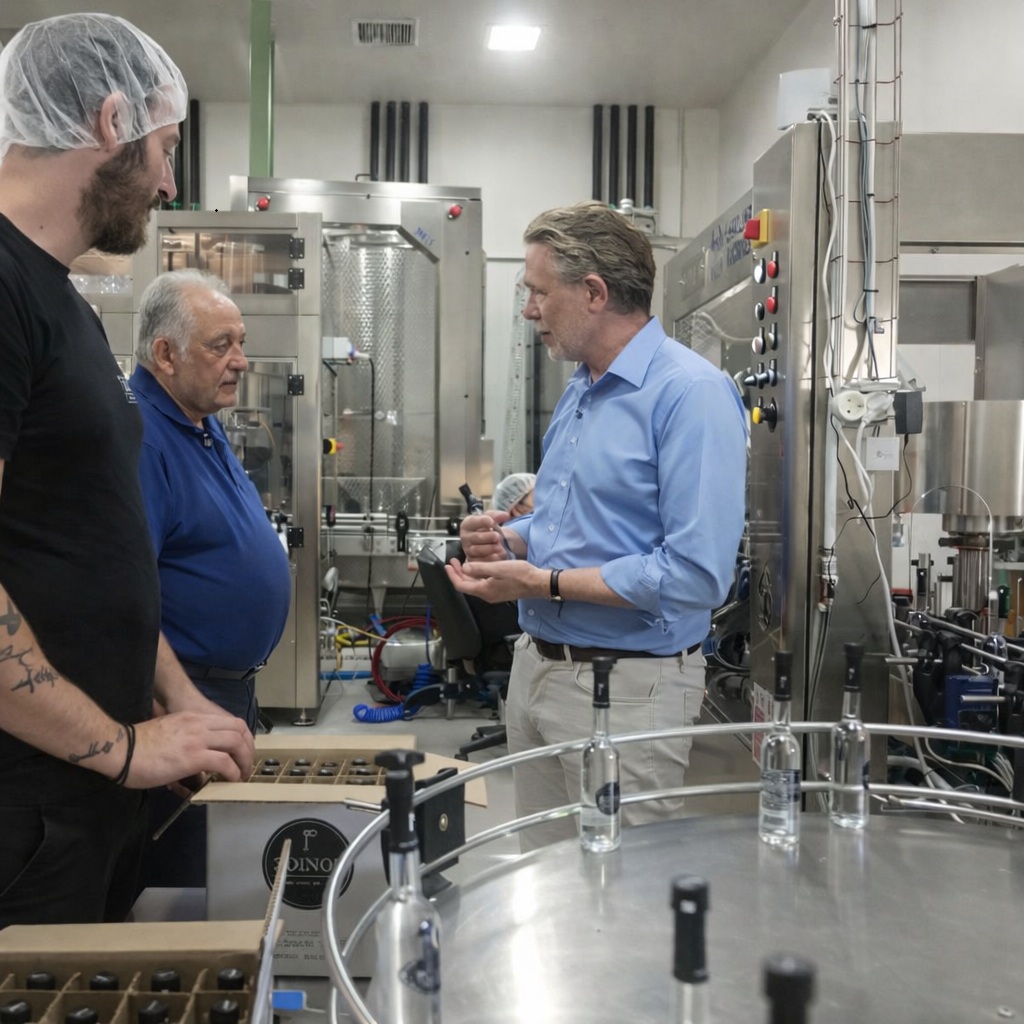
Pavlos Geroulanos, Parliamentary Representative of PASOK – KINAL and Member of Parliament, visited the facilities of Zoinos Winery in Zitsa during his visit to the Regional Unit of Ioannina.
Mr. Geroulanos was welcomed by Zoinos Winery Chairman Vangelis Argyris, Chief Executive Officer Thanasis Katsanakis, company executives and grape growers who cooperate with the winery.
During the visit, Mr. Geroulanos toured the wine and tsipouro production and bottling facilities, guided by the company’s Chairman and Zoinos Winery’s chemist-oenologist Eleni Sintou. He was informed about the winery’s operations and its role in supporting the local economy and primary production.
Particular emphasis was placed on Zoinos Winery’s contribution to supporting local viticulture through the utilization of abandoned vineyards and their reassignment to producers, as well as on the preservation and promotion of Epirus’ indigenous grape varieties, such as Debina, Vlachiko and Bekari, which constitute an integral part of the region’s wine identity.
During the discussion that followed, participants addressed the most significant challenges facing the viticulture sector, including the small and fragmented size of vineyard holdings, issues related to planting rights, and difficulties arising from the classification of certain areas as forest land.
“We are striving to remain competitive in the face of intense competition,” emphasized Zoinos Winery Chairman Vangelis Argyris, highlighting the challenges currently faced by Greek viticulture and cooperative enterprises.
“Zoinos Winery is a business that brings life to the region. This alone is of tremendous value, especially when we speak about rural depopulation and regions such as Epirus, which possesses immense wealth and potential, yet sees fewer and fewer young people choosing to remain here. The more businesses like this exist, the more young people will be encouraged to stay, and some may even return,” Mr. Geroulanos noted.
He also referred to the need for decentralization in decision-making processes, stressing that “all problems are local and should be solved locally. Unfortunately, due to the highly centralized nature of the Greek state, as long as issues have to pass through Athens, delays will persist. If we want faster and more effective decisions that can make a real difference in local communities, decision-making must take place at the local level.”
The visit concluded with an exchange of views on the prospects for the development of viticulture and wine tourism in Epirus. All participants agreed that supporting production, processing, and local grape varieties is a fundamental prerequisite for the sustainable development of rural areas and for retaining human capital in the regions.